
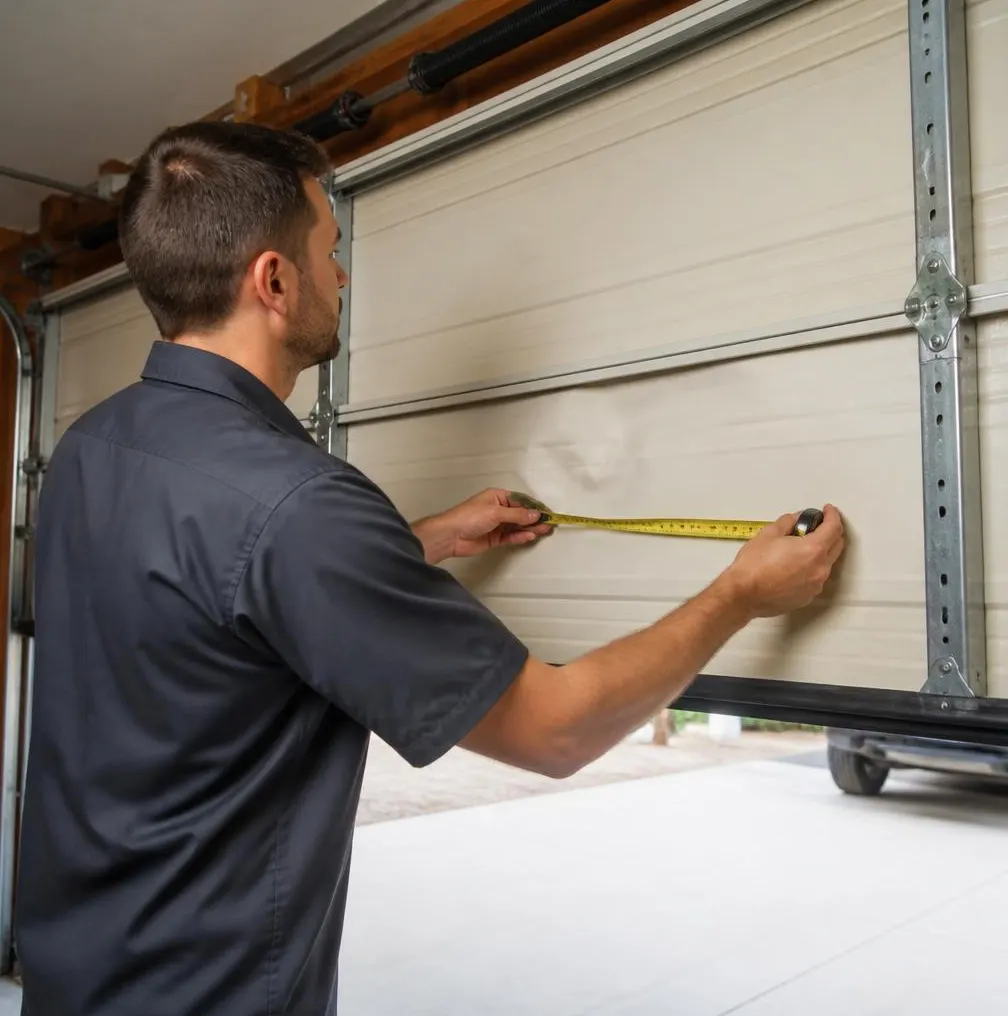
The Mistake Most People Make First
When a garage door starts closing and then reverses — or refuses to close at all — the first instinct for most homeowners is to reach for the opener's force or limit dial and crank it up. It's tempting because it's free, takes thirty seconds, and the door often does close on the next try. The problem is that the door was reversing or stopping for a reason. Turning up the force just overrides whatever the opener was sensing, whether that's a misaligned track, a dragging roller, or a spring that's lost tension. Instead of fixing anything, you've told the opener to push harder through a problem, which can mean a heavy door slamming down with more force than it should, straining the opener motor, or hiding a worn part until it fails completely.
What the Symptoms Usually Look Like
Before getting into causes, it helps to know which version of the problem you're dealing with, since that points technicians in different directions:
- Door reverses almost immediately after you hit the button, before it gets more than a few inches down.
- Door closes partway, then reverses back up every time, like clockwork.
- Door closes fully but immediately reopens once it touches the floor.
- Door won't move at all when you try to close it, or the opener light just blinks.
Each of these points to a different stage in the system, which is why a technician checks them in a specific order rather than guessing.
1. Safety Sensors First
The photo-eye sensors near the bottom of the tracks are the most common cause of a door that reverses mid-close, and they're the first thing worth checking because the fix is often free. These sensors need a clear, aligned line of sight to each other. If one is bumped out of alignment, has a spiderweb or dust across the lens, or catches direct sun glare at a certain time of day, the opener will read that as an obstruction and reverse the door. During Sunny Isles Beach's afternoon downpours, water droplets or condensation on the lenses can cause the same false reading. A technician checks for a steady indicator light on both sensors, wipes the lenses, and realigns them if the brackets have shifted.
2. Sensor Wiring and Connections
If the sensors look aligned and clean but the door still reverses, the wiring is next. Humidity and salt air are hard on exposed wire connections, and corrosion at the terminals can cause an intermittent signal that mimics a blocked sensor. Loose connections from the opener unit itself, or wire insulation nicked by rodents or yard equipment, produce the same symptom. This gets fixed by cleaning the terminals, tightening connections, or replacing a damaged run of wire.
3. Track Alignment and Obstructions
Next, a technician checks the tracks themselves for debris, dents, or misalignment. Humidity swings common in this area can cause wood door frames to swell slightly, which shifts how the track sits against the frame. A door dragging against a slightly bent or misaligned track will meet resistance partway down, and the opener reads that resistance as an obstruction and reverses. This is fixed by realigning the track or replacing a damaged section.
4. Rollers and Hardware Condition
Rust from salt air is a real issue for rollers, hinges, and bolts on homes near the coast. Worn or corroded rollers bind in the track instead of rolling smoothly, creating the same kind of resistance that trips a reversal. This is usually solved with roller replacement and hardware lubrication as part of a tune-up.
5. Opener Force and Limit Settings
If everything mechanical checks out, the opener's close-force and limit settings may simply be set wrong, causing the door to reverse before reaching the floor or to stop short. A technician adjusts these carefully and tests several cycles, because setting the force too high just masks a mechanical issue rather than fixing it.
6. Springs and Cables
A door that won't move at all, or that struggles and reverses under real strain, often points to a weakened or broken spring, or a frayed cable. Springs lose tension over time, and the opener isn't built to lift a heavy door without spring assistance, so it senses the strain and stops or reverses as a safety measure. Cables wear from the same cycle count and are prone to fraying or rust in coastal conditions. Both of these are mechanical repairs that should not be handled as a DIY project, given the tension involved.
When to Call Sunny Isles Beach Door & Opener
If you've checked the sensors and the door still won't behave, or if it's not moving at all, it's time to call in a technician rather than keep adjusting settings. We can diagnose whether it's an Off Track Door Repair, a worn-out cable needing Garage Door Cable Repair, or a spring that's reached the end of its life and needs Garage Door Spring Repair. We'll pinpoint the actual cause instead of just forcing the door to close.
If your garage door is reversing, sticking, or won't close at all, call Sunny Isles Beach Door & Opener for same-day garage door repair in Sunny Isles Beach, FL and get it fixed right the first time.